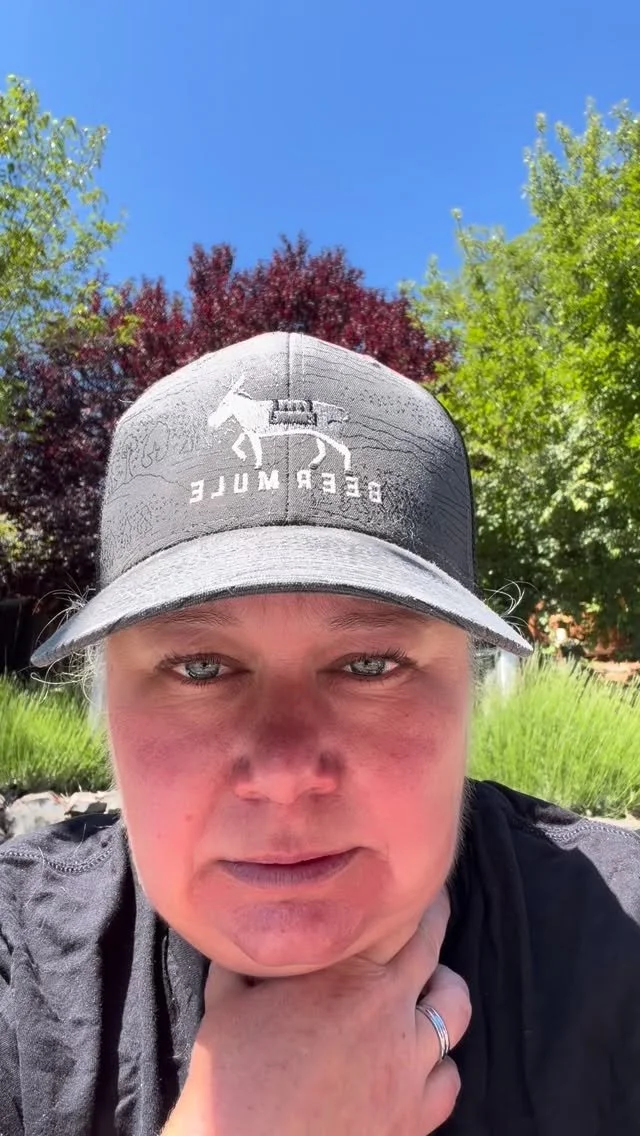

My name is Shannon. I'm a therapist, a coach, a trainer, the daughter of a firefighter, and perhaps most importantly, Chuck's scheduling assistant.
Let's start with the important stuff. Chuck is a 100-pound Turkish Akbash and a certified therapy dog. He comes to work with me regularly, and we love visiting first responder organizations to offer some support - and a little bit of fluff.
I grew up in a fire service family. I grew up watching the weight of the work — which means I understand the impact of the job, my dark humor has been trained since infancy, and I can tell you the difference between a truck and an engine. As I got older, I saw that same weight show up in the lives of other people I loved, in healthcare, in first response, in other helping roles. And when I became an adoptive parent, I finally understood what it felt like to carry it myself.
I have a Masters in Couple and Family Therapy from Antioch University and a coaching certificate from Fielding University. Before that, I spent close to a decade as a tech and data consultant. I know how to build systems. I know how to find the pattern inside a mess of information. And I know that the people who need help the most are often the ones most convinced they don't qualify for it.
Oh hello.
The job is heavy . . .
My mission is simple, even if the work isn't: make this job sustainable. Help you carry the weight of it while still showing up as the person you want to be at home. Not a hollowed-out version of yourself. The actual you — present, connected, someone your family recognizes.
This isn't just about you, though. When you're stronger, your family is stronger. When your family is stronger, your department is stronger. And when the department is stronger, the community you serve feels it. The work has gotten heavier. The calls are harder. The cumulative weight of what you see and carry is real — and it's not going away. What has to change is whether you have what you need to carry it.
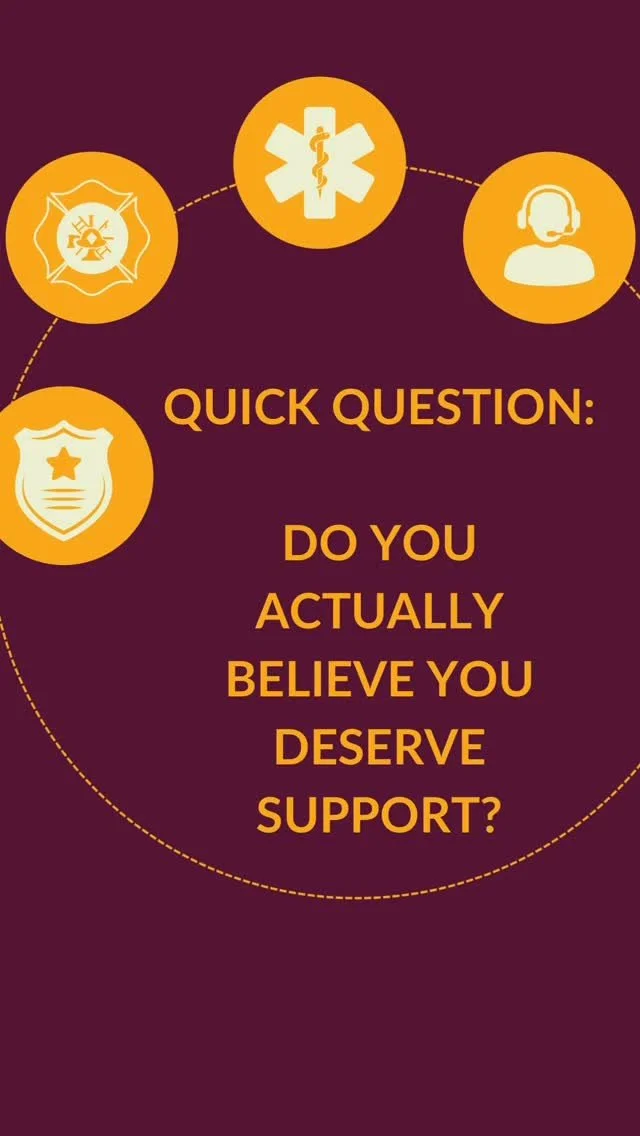
Which brings me to the thread I keep pulling on. You probably already know support matters. You've likely thought about it. But there's a voice that says not yet. Not me. Someone else has it worse. I'm not bad enough to deserve the time or the help. That voice is what I'm trying to dismantle — because it's not protecting you. It's just keeping you stuck.
. . . and most people are dealing with it in the wrong order.
Dismantling that obstacle isn't just something I talk about. It changed the way I work.
I'm a therapist and I believe in traditional therapy — deeply. But I've watched too many people sit with that "not yet" voice for years, waiting until things got bad enough to justify asking for help. I didn't want to keep waiting for people to hit that threshold. So I changed where I start.
I start with skills. Practical, concrete tools built specifically for this job and this life. I guide cohorts through a structured 9-week program — we name the goals, we build the foundation, and you walk away with a personalized Resilience Routine Plan that you actually built and know how to use.
Traditional therapy is incredibly valuable — but it's a next step, not the only step. And it doesn't have to be the first one. EMDR and one-on-one work are available too, just further down the path, for people who've built the foundation and are ready to go deeper.
We start with skills. And one of the first tools I use is something called the distress bucket. It's a good place to begin.

Stack of Stones?
A cairn is a stack of stones used to mark the trail. When you're not sure which way to go, you find the next cairn. My hope is that this work does the same thing — not that it solves everything, but that it helps you find your next step.